
By custom-displays.com Editorial Team | December 16, 2025
If you’ve ever ordered a crystal-clear display case, a sleek retail stand, or a precision-cut acrylic tray—and wondered where it really came from—you’re not alone. Behind the glossy finish and flawless edges lies a dynamic, often overlooked story: the fierce yet symbiotic rise of China’s regional acrylic manufacturing hubs. Today, three provinces dominate the conversation: Guangdong, Zhejiang, and Shandong. Each brings a distinct flavor to the table—be it scale, speed, or specialty—and understanding their differences can help buyers make smarter sourcing decisions.

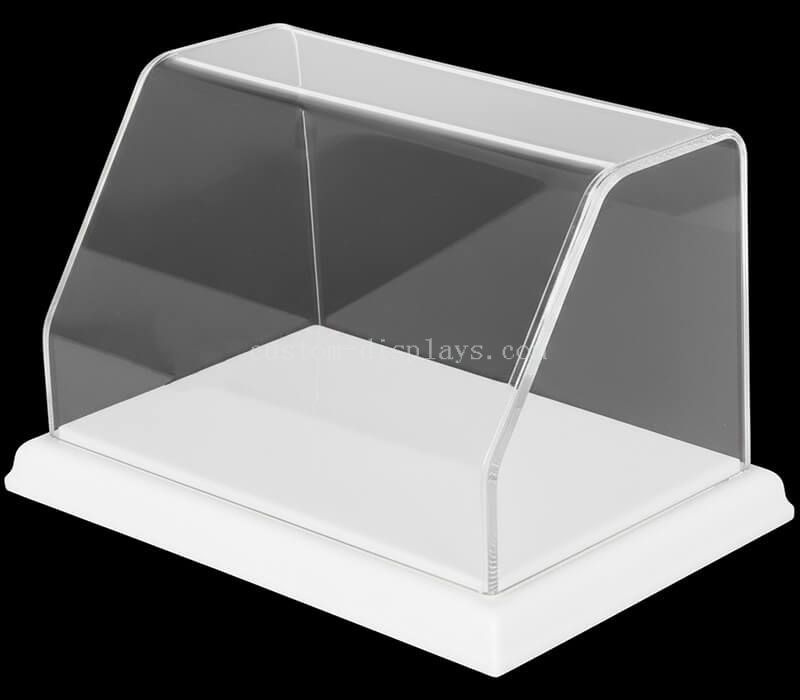
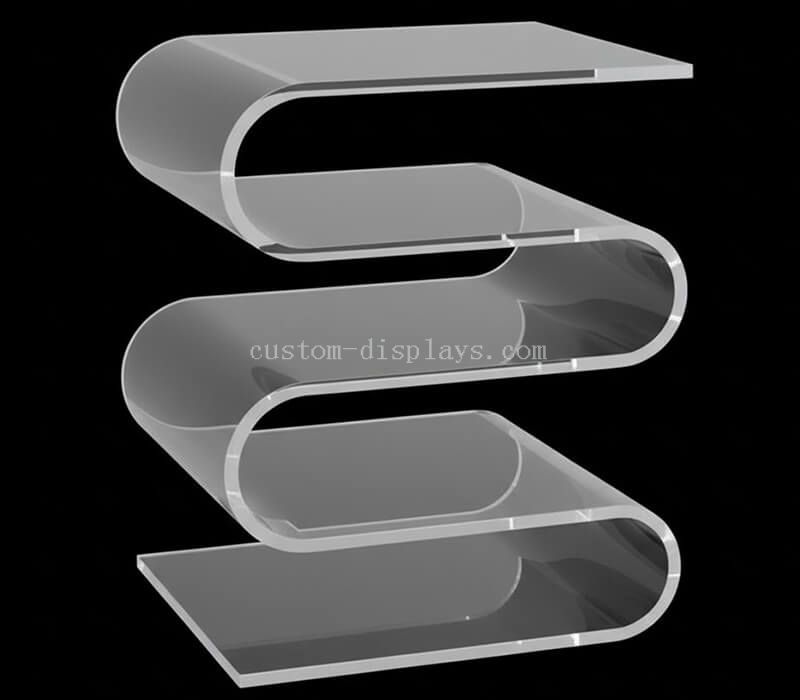
Let’s break it down—not with dry stats, but through the lens of real workshops, seasoned fabricators, and the subtle shifts reshaping this $1.8B+ industry.
Guangdong: The Innovation Powerhouse (Where Design Meets Delivery)
Home to Shenzhen, Dongguan, and Guangzhou, Guangdong has long been China’s export engine—and acrylic is no exception. Here, manufacturers like custom-displays.com in Dongguan don’t just cut sheets; they engineer experiences.
What sets Guangdong apart? Integration. Factories here often house full-service teams: industrial designers, CAD/CAM specialists, laser engravers, and even in-house logistics coordinators fluent in English, German, and Arabic. Need 500 custom lucite blocks with embedded LED channels and silk-screened logos—shipped to Berlin in 21 days? Guangdong says “done.”
But it’s not just about responsiveness. Over the past five years, Guangdong-based firms have heavily invested in precision fabrication tech—think 5-axis CNC routers, UV-cured bonding chambers, and automated polishing lines. The result? Near-optical-grade clarity even on complex geometries (like tapered display risers or interlocking modular shelving).
The trade-off? Higher MOQs and prices—typically 10–15% above national average—but justified by consistency. When global brands need repeatability (e.g., 10,000 identical makeup organizers across 3 continents), they turn here.
Zhejiang: The Agile Middle-Ground (Flexibility on a Budget)
Head east to Zhejiang—Yiwu, Ningbo, Hangzhou—and the vibe shifts. Smaller, family-run workshops dominate, many clustered around raw material suppliers (PMMA pellet importers, sheet extruders).
Zhejiang’s superpower? Adaptability. These shops thrive on low-volume, high-mix orders. A boutique in Lisbon needs 30 uniquely shaped perfume display stands? A café chain in Melbourne wants 200 pastel-tinted serving trays with hand-polished edges? Zhejiang delivers—often at 20% lower cost than Guangdong—without demanding CAD files upfront.
Their edge lies in craftsmanship, not just code. Many senior technicians learned on manual lathes and saws before adopting digital tools. That hybrid skill set means they can troubleshoot warping, stress-cracking, or glue-line issues on the fly—something algorithms still struggle with.
That said, quality control can vary. Buyers report occasional inconsistencies in thickness tolerance (±0.3mm vs. Guangdong’s ±0.1mm) or edge finish on large batches. Still, for startups, pop-up retailers, or seasonal campaigns, Zhejiang remains the go-to for speed-to-prototype and budget-conscious scaling.
Shandong: The Heavy-Duty Contender (Volume, Value, Vertical Integration)
Then there’s Shandong—Qingdao, Jinan, Weifang—often underestimated but rapidly gaining ground. If Guangdong is the tech-savvy designer and Zhejiang the nimble artisan, Shandong is the industrial workhorse.
Why? Two words: raw materials. Shandong hosts several of China’s largest domestic PMMA sheet producers (including joint ventures with Mitsubishi Chemical and LG Chem). This vertical integration slashes input costs—and delivery lead times—for bulk orders.
Factories here specialize in high-thickness, structural-grade acrylic: 20mm–100mm blocks for awards or museum pedestals, thick-walled protective enclosures, even architectural partitions. Their machinery is built for throughput: gantry saws that cut 1200×2400mm sheets in under 90 seconds, hydraulic hot-bending rigs for large-radius curves.
The catch? Less focus on fine detailing. Laser etching or multi-layer laminations? Possible—but usually outsourced. Shandong shines when specs prioritize durability, size, and cost-per-unit over boutique finishes.
The Bigger Picture: Not a Race—But a Relay
Truth is, the “vs.” in Guangdong vs. Zhejiang vs. Shandong oversimplifies a deeply collaborative ecosystem. Many top-tier suppliers—even in Dongguan—source thick blanks from Shandong, then finish and assemble in-house. Others partner with Zhejiang artisans for hand-polishing delicate edges.
What’s changing fast? Sustainability. All three regions are now racing to adopt recycled PMMA (rPMMA) and VOC-free bonding agents—partly driven by EU Green Deal compliance. Guangdong leads in closed-loop water systems for polishing; Zhejiang excels in scrap-reuse (turning offcuts into acrylic keychains or coasters); Shandong invests in solar-powered extrusion lines.
So—Who Should You Choose?
- Need brand-critical, high-spec displays for flagship stores? → Guangdong
- Running a small business with evolving designs? → Zhejiang
- Procuring 5,000+ units of standardized, heavy-gauge items? → Shandong
At custom-displays.com, based in Dongguan’s innovation corridor, we see ourselves not as “better”—but as different. We combine Guangdong’s tech backbone with Zhejiang’s craftsmanship ethos, and increasingly, source sustainable blanks from Shandong partners. Because in today’s market, the real winners aren’t those who pick a side—but those who know how to orchestrate the whole band.
Curious how your project fits into this landscape? Drop us a line at sales@custom-displays.com. No templates. No bots. Just real people ready to talk acrylic.
 English
  Español
  Français
  Deutsch
  Italiano
  한국어
한국어