
For years, acrylic – that crystal-clear plastic we see everywhere from retail display cases to museum showcases – has been a sustainability headache. It’s durable, lightweight, and optically perfect, which is why custom fabricators like us at Custom Displays love it for signage, point-of-sale units, and protective barriers. But once an acrylic sheet has served its purpose, traditional recycling methods struggle. Mechanical grinding and re-melting often produce lower-grade material riddled with impurities, and a lot of it ends up in landfills anyway. The industry has quietly been searching for a better way. Now, a promising breakthrough in chemical depolymerization appears to have cracked the code, achieving a remarkable 95% recovery rate of high-purity monomer.
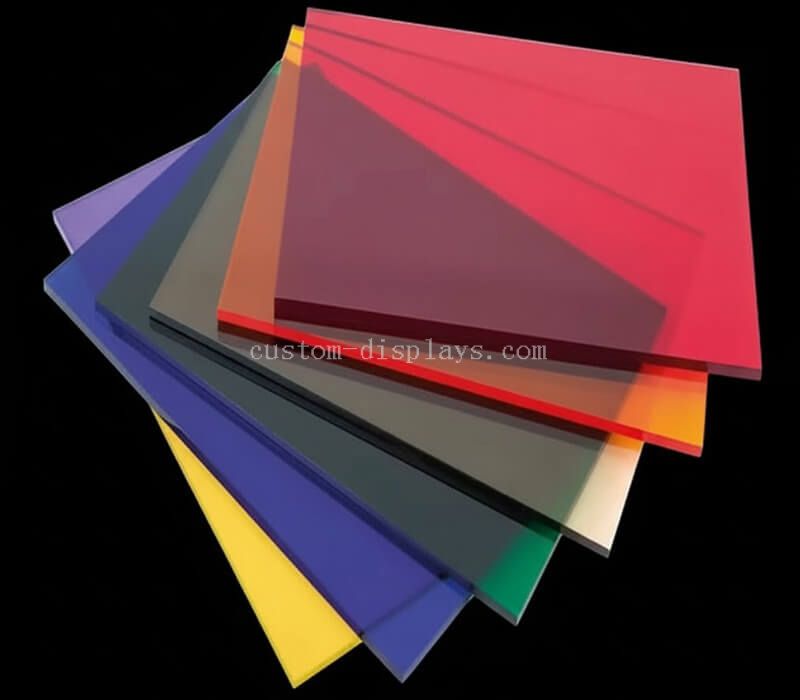
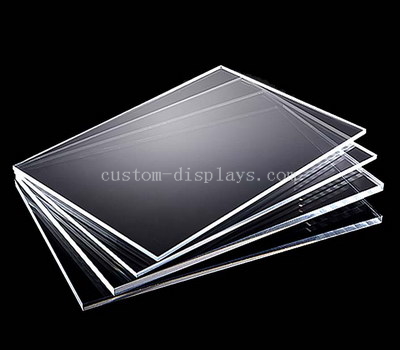

The new process, developed by materials scientists working on closed-loop polymer recycling, targets polymethyl methacrylate (PMMA), the technical name for the acrylic most of us know and use daily. Instead of simply chopping the plastic into flakes and hoping for the best, chemical depolymerization essentially reverses the manufacturing reaction. Under controlled heat, catalysts, and sometimes specialized solvents, the long polymer chains break back down into their original building blocks – methyl methacrylate (MMA) monomers. These recovered monomers can then be purified and repolymerized into brand-new acrylic that is virtually indistinguishable from virgin material.
What makes this latest advance stand out is the efficiency. Earlier attempts at depolymerization often hovered around 70-80% recovery and required energy-intensive conditions that offset some of the environmental gains. The improved technique, refined over the past couple of years in pilot facilities, pushes recovery to 95% while keeping energy use and by-product formation remarkably low. Independent lab tests reportedly confirm the reclaimed MMA meets or exceeds the purity standards needed for optical-grade acrylic – the same high-clarity stuff we specify for museum vitrines and high-end retail counters.
For the display industry, this is more than just good news; it’s a genuine game-changer. At Custom Displays, we’ve watched clients grow increasingly conscious about the full lifecycle of the acrylic fixtures they order. Retailers, museums, and corporate offices want beautiful, durable solutions today, but they also want to know their displays won’t become tomorrow’s waste problem. With 95% monomer recovery now within reach, we can start talking seriously about true circularity. Imagine a custom acrylic counter that, after five or ten years of service, gets collected, depolymerized, and reborn as a fresh sheet ready for the next store fit-out – all without any drop in quality or clarity.
The environmental upside is equally compelling. Producing virgin MMA from fossil fuels is carbon-intensive. Every tonne of recycled monomer put back into circulation means one less tonne that has to be manufactured from scratch. Early estimates suggest the new process could slash the carbon footprint of acrylic production by more than 70% when scaled up. That’s a figure that resonates strongly with the eco-conscious brands we work with every day.
Of course, challenges remain before this technology floods the market. Collection infrastructure for post-consumer acrylic is still patchy in many regions. Not every city has convenient drop-off points for old display cases or signage, and sorting mixed plastics at recycling centers can be tricky. There’s also the question of economics. Setting up industrial-scale depolymerization plants requires significant investment, though falling energy costs and rising landfill fees are steadily tilting the balance in favor of chemical recycling.
Still, the momentum feels real. Several major chemical manufacturers have already announced partnerships to commercialize the 95%-recovery process, and pilot programs in Europe and parts of Asia are feeding recovered monomer back into supply chains. Closer to home, forward-thinking fabricators are beginning to explore take-back programs where old acrylic displays are returned for processing. At Custom Displays, we’re actively monitoring these developments because we believe our customers deserve options that align with both aesthetics and responsibility.
One particularly encouraging aspect is how well the technology preserves the very properties that make acrylic so popular in the first place. Recovered sheets maintain the same light transmission, weather resistance, and surface finish that designers expect. There’s no yellowing, no loss of impact strength, and no need to compromise on the crisp, modern look that defines contemporary retail and exhibition spaces. That consistency matters enormously when you’re specifying materials for high-profile projects.
Looking ahead, the ripple effects could extend far beyond our niche. Automotive light lenses, medical device housings, and even aquariums could all benefit from higher-quality recycled acrylic. But for those of us who design and build custom displays, the immediate payoff is the ability to offer clients a genuinely sustainable story without sacrificing performance. We can now tell a retailer that the striking acrylic gondola they install this season has a realistic path back into the manufacturing loop instead of heading to the dump.
It’s still early days, and full-scale adoption will take time, but the 95% recovery benchmark feels like a tipping point. For too long, acrylic’s recyclability was more marketing slogan than practical reality. Chemical depolymerization is changing that narrative, one high-purity monomer at a time. As the technology scales and collection systems catch up, we’ll see more projects specifying “recyclable-to-virgin” acrylic as standard rather than a premium add-on.
At Custom Displays, we’ve always prided ourselves on helping clients create displays that don’t just look great but also work smarter for the long haul. This latest recycling breakthrough gives us even more confidence that beautiful acrylic solutions and genuine environmental stewardship can go hand in hand. The puzzle isn’t completely solved yet, but the pieces are finally fitting together in a way that feels genuinely promising.
If your next project involves custom acrylic displays, signage, or protective barriers and you’re thinking about lifecycle impact, we’d love to talk through the latest sustainable options. The future of acrylic is looking clearer than ever – literally and figuratively.
 English
  Español
  Français
  Deutsch
  Italiano
  한국어
한국어